Sea & hill
Barceloneta & the beaches
A wedge of old fishermen's streets, a string of beaches that nobody had until 1992, and a stretch of waterfront that rewards anyone willing to keep walking.
Barceloneta is shaped like a slice of cake. Cut the triangle from the rest of the city in the 1750s, fill it with terraced houses for the fishing families who lost their homes when the old waterside district was flattened to build the citadel, and you get the grid that's still there: narrow streets, four- and five-storey blocks, and balconies hung with washing because the flats are tiny and nobody has a dryer. Walk in from the Old City and the change of register is immediate. The grand stuff stops. Things smell of salt and fried fish.
And then there's the beach — the part most visitors come for, and the part I'd argue least about. It's fine. It's also entirely artificial.
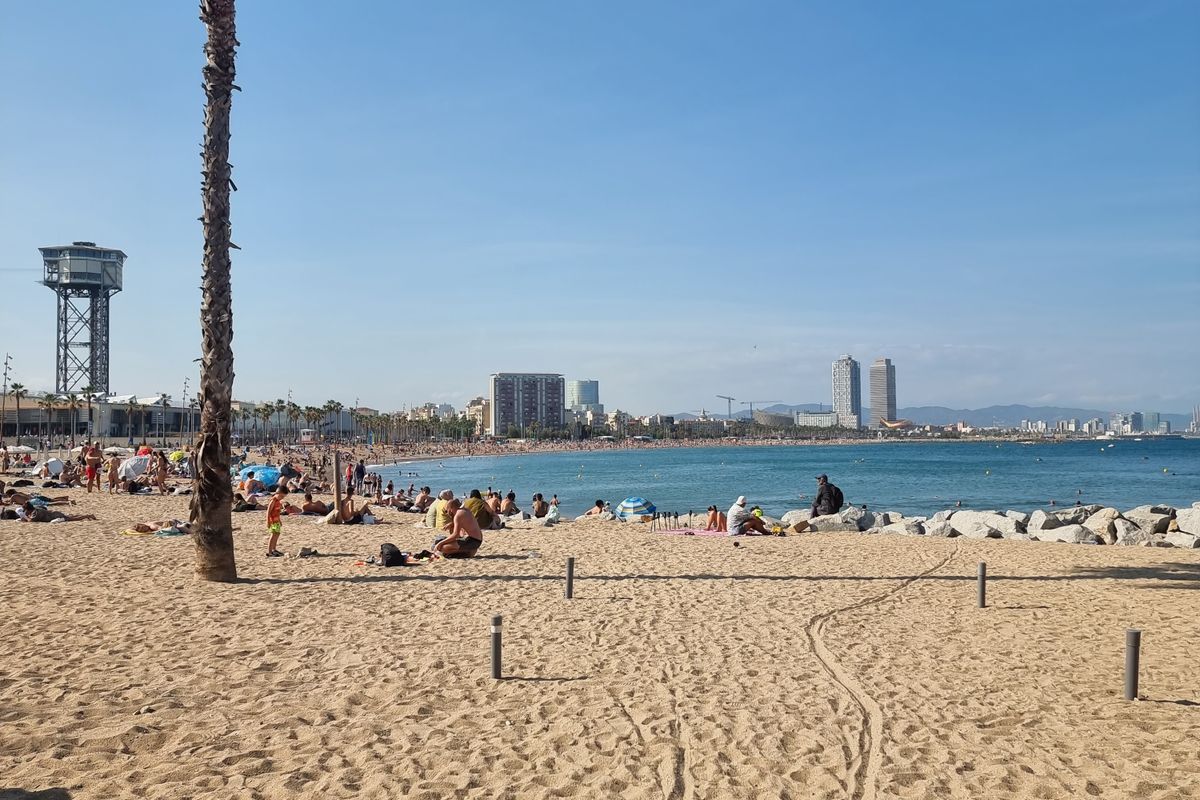
A coastline that was invented for a fortnight in summer
Before the 1992 Games, this whole seafront was working industrial edge — railway, gasworks, warehouses, and a long shantytown called El Somorrostro that at its peak housed something like fifteen thousand people in shacks with no running water. The city cleared the last of it in the run-up to the Olympics, hauled in sand from down the coast, and built the beaches you see now from scratch. The flamenco dancer Carmen Amaya was born in those shacks; there's a plaque for the settlement near where the sand starts, and the stretch beside the marina was later renamed Somorrostro in its memory. Worth knowing while you're spreading out your towel on what is, technically, a very large landscaping project. The city council's own history page is blunt about it.
None of which makes the swimming worse. It just means you should drop any idea that you've found some ancient Mediterranean fishing cove. You haven't. You've found a beach a metro ride from a cathedral, which is its own kind of luxury.
Keep walking — the sand gets better the further you go
Single most useful line in this article: the beach closest to the Barceloneta metro is the worst one. It's the most crowded, the most patrolled by people selling cold cans and massages, and the one where you'll spend the day shoulder to shoulder with a stag party. Everything improves as you head northeast. Beaches run in a chain here, each a little calmer and more local than the last.
- Barceloneta — the busy one. Postcard view, no elbow room.
- Somorrostro — beside the Port Olímpic marina; barely a step quieter.
- Nova Icària — families, volleyball nets, a calmer tempo.
- Bogatell — wider, breezier, my usual pick for actually lying down.
- Mar Bella — younger crowd, sports area, and a marked nudist section toward its far end (no surprises if you wander into it knowingly).
- Nova Mar Bella — almost residential, the locals' Sunday beach.
A brisk fifteen to twenty minutes of walking from the Barceloneta crush gets you to Bogatell, and the difference in space per person is enormous. Bring flip-flops; the boardwalk is long and the sand gets ferociously hot.
The first beach is the one everyone photographs. The fourth is the one I'd actually choose. The walk between them is the whole point.
The chiringuitos, and the W on the horizon
Dotted along the sand are the chiringuitos — beach bars, spelled xiringuito in Catalan — and they're exactly what you want around six in the evening: a cold vermouth, a plate of olives, your feet still gritty. Some do proper grilled fish; most do drinks and a view, which is enough. At the tip of Barceloneta, where the marina meets the open water, the curved glass slab of the W hotel rises like a sail. Locals call it the Hotel Vela, and whatever you think of it, it's become the marker you steer by along this coast.
Behind the W sits Port Vell, the old harbour, now full of superyachts that cost more than the neighbourhood they're moored against. It's a strange, pleasant contrast to walk: laundry lines one minute, a hundred-metre boat the next.
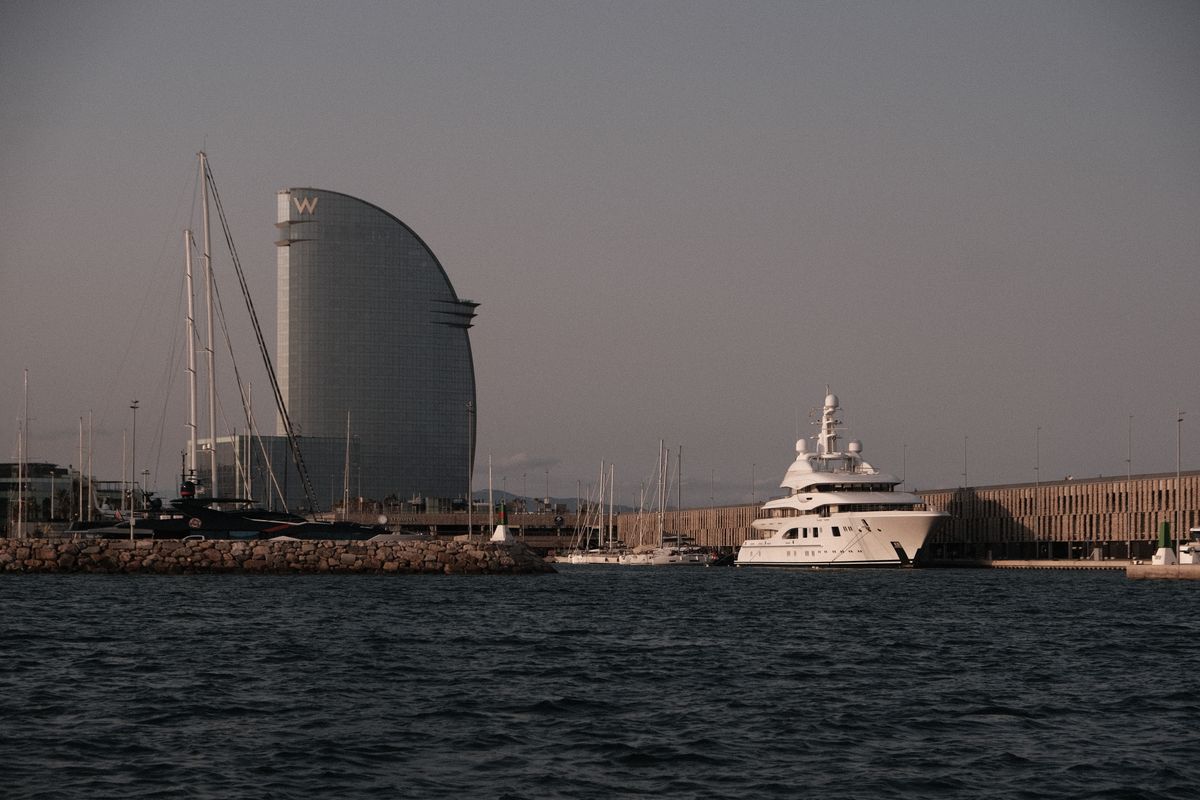
If you're chasing a sunset over the water, you're on the wrong coast — the sea here faces roughly southeast, so the sun sets behind the city, not the horizon. For a proper golden-hour view down over the rooftops and the port, climb the hill at Montjuïc instead and look back.
Eat a street back from the sand, not on it
Here's where I'll be unkind. The restaurants lining the seafront promenade — the ones with laminated photo menus, a host waving you in, and "PAELLA" in foot-high letters — are a trap, and a fairly cynical one. Much of that "paella" is reheated, dyed an alarming yellow with colouring rather than saffron, and padded with peas and chorizo that no self-respecting Valencian would allow near the dish. Because paella is Valencian, not Catalan, in the first place.
What Barcelona actually does well is rice and noodles cooked properly. Look for arròs (the local rice dishes, including the squid-ink-black arròs negre) and fideuà, which is the same idea built on short noodles instead of rice. And to find the good versions you do one simple thing: turn your back on the sea and walk into the grid. The family-run places on Barceloneta's inner streets — cloth napkins, a wall of noise, half the room speaking Catalan — are where the seafood is worth your money. There's more on the rice-and-vermouth circuit in the tapas and vermouth notes if you want a fuller steer. Time Out's Barcelona listings are a reasonable starting point when you want a name rather than a gamble.
Getting there, and not getting fleeced
Metro does the work. Line 4 (the yellow line) drops you at Barceloneta for the quarter and the near beach, or at Ciutadella | Vila Olímpica if you'd rather start further up the chain and walk back. From the centre it's a short, cheap ride either way; details and ticket types are on the city transport map.
Two flat warnings. First, in July and August the near beaches are genuinely heaving — go early, or go further. Second, bag-snatching on the sand is a real and well-organised thing here; don't leave a phone on a towel while you swim, and don't carry your passport to the beach at all. Take what you'd be comfortable losing, and not a euro more.
The honest verdict, then: Barceloneta beach itself is ordinary and packed, and that's fine — most great cities don't have a swimmable beach twenty minutes from the medieval core at all. The trick isn't to skip it. It's to use it lightly — wander the old streets, eat a street back from the water, and walk up the coast until the crowd thins and the beach finally feels like yours.