Practical
Barcelona El Prat: into the city & onward
Five ways out of arrivals, what each really costs, and the part the brochures skip — how a Barcelona airport to Salou transfer gets you south without dragging your bags through a station change.
Getting out of El Prat comes down to one honest question you answer before you leave arrivals: are you heading into the city, or straight on past it? Almost every guide stops at Plaça Catalunya and waves you off. We won't, because a fair share of people landing here are aiming for the beach towns down the coast, and the smart move from the airport is not the same one.
First, the lay of the land. The airport — officially Josep Tarradellas Barcelona-El Prat, BCN on your boarding pass — sits about 15 km southwest of the centre, hard against the sea and the port. There are two terminals, mapped out on the official airport site. T1 is the big modern one and handles most flights; T2 is older and mainly serves low-cost and regional carriers. A free shuttle bus loops between them every few minutes, day and night, so don't panic when you land at T1 and read that the train only goes from T2 — that's what the shuttle is for.
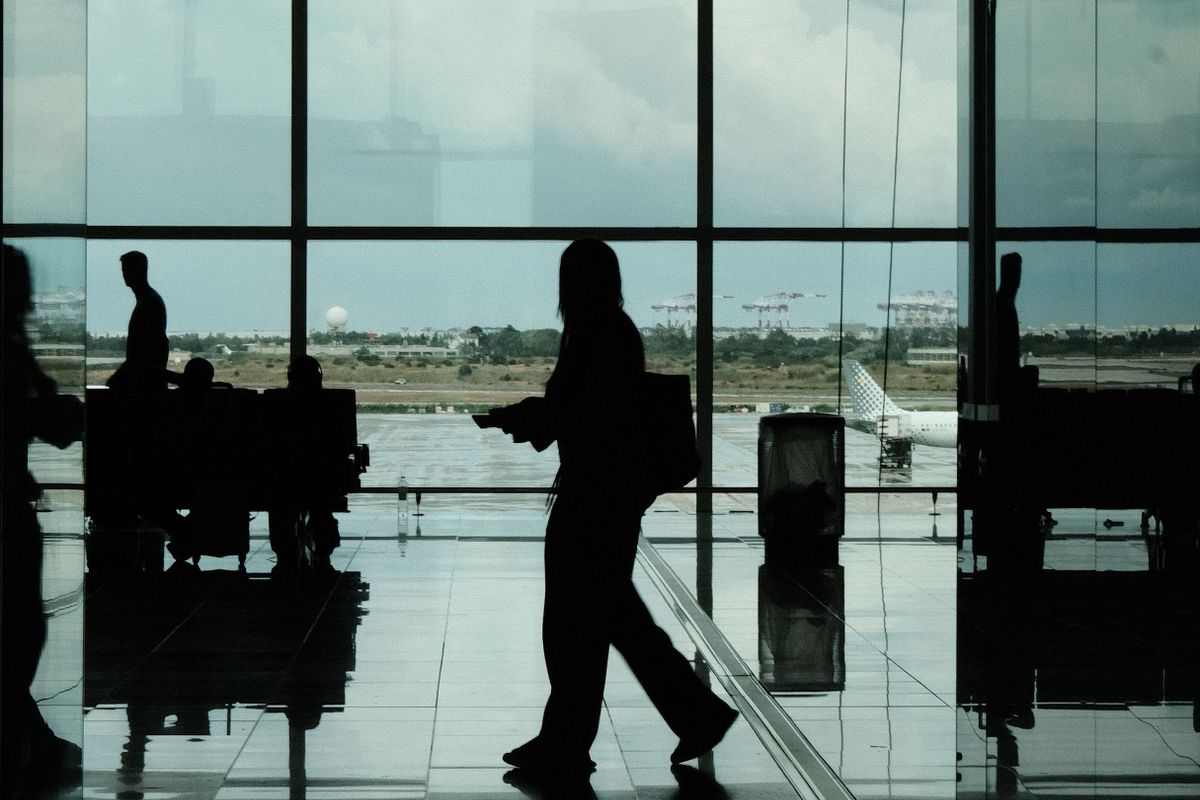
The Aerobús, if you just want to be in town
For most people, most of the time, the Aerobús is the right answer. It's the dedicated express coach: the A1 runs from T1, the A2 from T2, both straight to Plaça Catalunya by way of Plaça Espanya. A single is roughly €7.75, it leaves every five to ten minutes, and the run takes about 35 minutes with light traffic; the Aerobús timetable lists the night hours if you're landing late. Luggage space below, pay the driver or a machine, and you don't have to read a single platform sign.
Not the cheapest option — that's the train — but the one with the fewest moving parts. Tired, travelling solo or as a couple, with a hotel near Catalunya, Espanya or the upper Eixample? Take it and stop thinking. Last departures roll out around 00:35 to 01:00, then a reduced night service runs until the first buses at 5am.
The R2 train, for people who count their euros
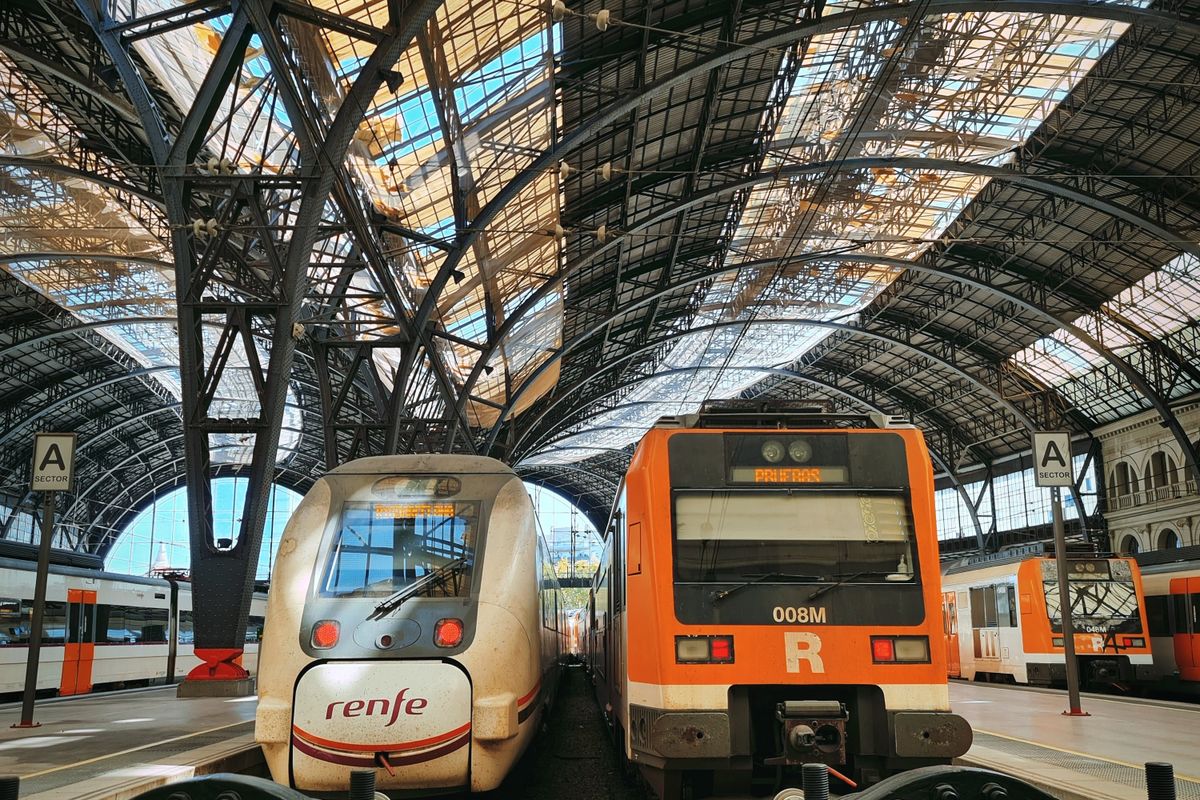
The cheapest legitimate way into the city is the Renfe R2 Nord commuter train. It leaves from T2 and reaches Barcelona Sants in about 25 minutes, calling at Passeig de Gràcia and Clot on the way — so if you're staying near the middle of town, you step off practically at your door. A single is around €4.60, free if you're already holding a Hola Barcelona travel card.
The catch is right there in the wording: it goes from T2. Land at T1, and you ride the free shuttle to T2 first, then walk to the platform — maybe fifteen extra minutes and a little faff with bags. Trains run roughly every half hour, which matters if you've just missed one at midnight. My honest read: brilliant value from T2 or travelling light; a bit of a slog with a suitcase from T1.
Note
A normal city T-casual ticket does not cover the airport metro or the airport rail fare. The airport sits in its own zone with its own pricing, so buy the right ticket at the machine or load a Hola Barcelona card before you tap in — otherwise you'll be sorting it out at a gate while everyone files past.
Metro L9 Sud — clever, but read the map
Line L9 Sud reaches both terminals now, and it looks tempting on a map. Honest truth: it heads into the south and west of the city rather than the centre, so unless you're staying near one of those stops you'll change lines at Collblanc or Torrassa to reach Catalunya or Sagrada Família — close to 45–50 minutes door to door once you factor the transfer.
It needs a special airport ticket — about €5.15, or covered by the Hola Barcelona card, both detailed on the city transport authority pages. Where it shines is luggage-light arrivals heading to the Sants, Zona Universitària or Fira side of town. For a first-timer with a big case aiming at the old city, the Aerobús or a taxi is less of a puzzle.
Taxi and the pre-booked car
Black-and-yellow taxis wait at a marked rank outside each terminal. They're metered, with a fixed airport supplement and a minimum fare, so a ride to the centre lands at roughly €35–40 and takes 25–30 minutes depending on the Ronda traffic. For three or four people splitting it, that's often less per head than four Aerobús tickets, and you skip the walk at both ends. Downside: the summer queue — on a hot July afternoon the rank can back up twenty deep, exactly when a tired family least wants to stand in line.
That's the gap a pre-arranged private transfer fills. You book a fixed price ahead, a driver meets you in arrivals with a sign, and you walk straight to the car — no meter anxiety, no rank queue, no late-night gamble on whether the last train has gone. For a Barcelona airport transfer booked in advance, the price for the centre lands around a taxi or a touch above; but the real argument isn't the fare into town. It's three things: groups with luggage, flights after midnight, and onward towns where public transport gets awkward.
Into the city, almost anything works — the airport is close and well-connected. It's the leg past the city, down the coast, where the choice actually decides how your first afternoon goes.
How the city options stack up
The short version, for the run from arrivals to roughly the centre. Prices are approximate and shift a little year to year, but the shape of it holds.
| Option | Rough cost | Time to centre | Good for |
|---|---|---|---|
| Aerobús (A1 / A2) | ~€7.75 single | ~35 min | Simplicity; solo & couples; Catalunya / Espanya |
| R2 Nord train | ~€4.60 (free on Hola BCN) | ~25–30 min | Lowest cost; light luggage; T2 arrivals |
| Metro L9 Sud | ~€5.15 airport ticket | ~45–50 min (with change) | South/west side of the city; no big bags |
| Taxi | ~€35–40 | ~25–30 min | Groups; lots of luggage; late flights |
| Pre-booked car | ~taxi price or a little more | ~25–30 min | Groups; midnight landings; onward towns |
A few small realities worth carrying off the plane:
- ATMs and SIM-card kiosks are right there in both arrivals halls — pull cash and a local data SIM before you leave the building, not after.
- The inter-terminal shuttle is free and frequent; check whether your departure or your train is at T1 or T2 so you're not hunting at the last minute.
- Last Aerobús is around 00:35–01:00 with a thinner night service after; the R2 train thins out late too, so a very late arrival often makes a taxi or pre-booked car the only sane call.
- In high summer the taxi rank queues; if that's your plan, factor twenty minutes of standing, or arrange the car ahead.
Onward to Salou and the Costa Daurada
Now the part the airport signs ignore. Plenty of people landing at BCN aren't staying in Barcelona at all — they're bound for Salou, the family beach town on the Costa Daurada beside PortAventura, about 100–110 km southwest. Two honest ways to do it, and they're genuinely different.
By rail, it's a two-stage journey. You first ride into the city — the R2 train to Sants, say — then change onto a Renfe regional service down the coast to Salou via Tarragona. That second leg alone runs about an hour and fifteen to an hour and a half, so the whole airport-to-Salou trip, with the connection, easily eats two to three hours. Cheap and doable, but you're hauling bags through Sants and onto a second platform, which after a flight is exactly what turns a holiday morning sour.
By road, it's one move. A taxi or a pre-arranged car from Barcelona airport to Salou takes about an hour straight down the AP-7 — no city detour, no station change — which is why so many beach-resort travellers pre-book the whole leg as a single door-to-door ride rather than splitting it across two trains. Split between a family, the road option often works out reasonable per head, and it lands you at the apartment with bags intact and the afternoon still ahead. Sort out the city once you've checked in — our notes on getting around Barcelona cover the metro, the T-casual and the bits the airport ticket won't pay for, and the day trips from Barcelona page maps what's reachable from the same coastal line.
None of these is wrong. The Aerobús is the safe default into town, the R2 the bargain, the taxi rank the catch-all, and a pre-booked car earns its keep for groups, late nights and the long pull south. Pick whatever matches how heavy your bags are and how far past Barcelona you're really going — and then go find lunch.