Practical
Getting around Barcelona
Barcelona is one of those cities you can largely walk, with a metro underneath for the long hops. Here is what to buy, what to skip, and the single ticket rule that trips up almost everyone arriving from the airport.
Most days here, our feet do the work and the metro does the rest. The centre is compact, the grid is logical, and trains turn up often enough that you stop checking the board. The trick is not learning a hundred routes. It is buying the right ticket once, validating it, and knowing the one line where your normal ticket will not let you through the gate.
So let us start underground, where you will spend most of your transit money.
The metro is your friend, and it is fast
TMB runs eight metro lines across the city, and the network is genuinely good — clean, frequent, and quick enough that a cross-town trip rarely takes more than twenty minutes. Trains run until midnight on weekdays, until 2am on Friday, and all night long on Saturday, which matters more than you would think when a dinner runs late or a night out drifts past the last bus.
Lines are colour-coded and numbered (L1 red, L2 lilac, L3 green, L4 yellow, and so on), and the maps inside every carriage are easy to read even half-asleep. Stations are signed by exit, so check the street name before you climb the stairs — surfacing on the wrong side of a six-lane avenue in the Eixample is a small but real annoyance.
One ticket question, settled
This is the part people overthink. There are really only two tickets worth your attention as a visitor, and the choice between them comes down to how long you are staying and whether the airport is in your plans.
First, the T-casual: ten single journeys, zone 1, for one person, at roughly €13. You tap once per journey and the card counts down. Free transfers between metro, bus and tram are baked in for up to 75 minutes, so a metro-then-bus hop still only costs you one ride. Rather than expiring on a clock, it expires when the ten rides are gone — which makes it the relaxed, sensible default for a few days of pottering about.
Second, the Hola Barcelona travel card: unlimited rides for a fixed stretch of time. It comes in 48, 72, 96 and 120-hour versions, priced from about €18.70 for two days up to roughly €43.60 for five. One headline reason to consider it: unlike the T-casual, it does cover the airport metro.
If you are staying three or four days and riding the metro a handful of times a day, the maths almost always favours the T-casual — unless you are taking the metro to or from the airport, in which case the Hola card quietly pays for itself.
A few small things that save money or hassle, worth committing to memory before you tap in:
- Buy a T-casual if you are here a few days, rather than feeding the machine for a single ticket every time — per-ride is poor value.
- Children under four ride free, no ticket needed.
- Validate every journey at the gate or on the bus reader; an un-tapped card is treated as no ticket, and inspectors do check.
- The airport metro line, L9 Sud, needs its own special Airport Ticket (around €5.90 one way). A normal T-casual is not valid to or from the airport on the metro — the gate will refuse it.
That last point is the one that catches people, every week, dragging a suitcase. Plan for it on arrival and you will never think about it again. Our companion to getting in from El Prat goes through the airport options in full, including when the metro is the smart call and when it really is not.
Buses, trams, and the trains that climb
Buses fill the gaps the metro leaves, and the same T-casual or Hola card works on them. They are slower in traffic but they show you the city through a window, which the metro never will. Trams (the T1 through T6 lines) mostly serve the edges and the Diagonal — useful if you are out that way, easy to ignore if you are not.
Then there is the FGC. These commuter trains run separately from the TMB metro but fold into the same fare zones, and they are how you reach two places worth the trip: Montserrat, the jagged mountain monastery an hour out, and Tibidabo, the hill that looks down over the whole city. FGC line L7 climbs from Plaça de Catalunya toward Avinguda Tibidabo; the Montserrat line heads out from Plaça d'Espanya. Separately, the regional coast trains that carry you out to the beach towns and other day-trip stops mostly leave from Barcelona Sants and Passeig de Gràcia, so check which station your particular trip uses before you set off. Timetables and the route searcher live on the FGC website, which is the one I actually trust for departure times.
Tibidabo, the funicular, and a tram on pause
Getting up Tibidabo is half the fun. Historically you rode the Tramvia Blau, a creaking blue heritage tram from 1901, up to the foot of the hill, then switched to the funicular for the final, steep haul to the amusement park and the church on top.
One honest heads-up: the Tramvia Blau has been paused for restoration works, with a bus standing in for that leg. Before you build an afternoon around the old tram, check whether it is running again — the Tibidabo site keeps the current status and funicular times.
The funicular itself was rebuilt and reopened recently, with big panoramic windows that make the climb part of the view rather than a chore. Even with the heritage tram between lives, the trip up is worth doing for the panorama alone.
Taxis: honest, metered, and best after dark
Barcelona's taxis are the black-and-yellow ones, and as city cabs go they are refreshingly straight. They run on a meter, rates are regulated, and in years of catching them I have never once been taken the scenic way round. A short hop across the centre is a few euros; airport runs and late-night fares carry supplements, all posted on a sticker in the window.
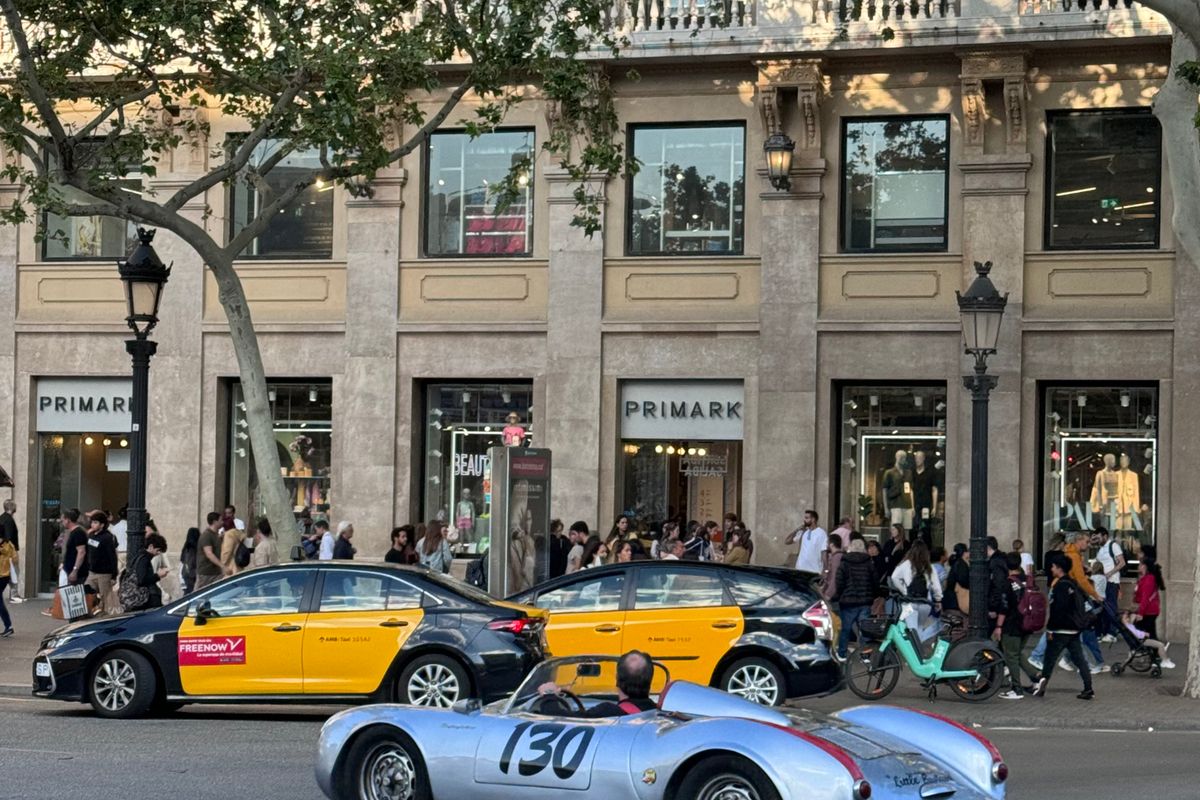
My honest take: you rarely need one. The metro covers the daytime, walking covers the rest, and a cab earns its keep late at night when the trains have stopped and you would rather not puzzle out a night bus. Order one through a local app or wave down a green rooftop light — green means free.
So, what would I actually do?
If you are here for a long weekend, the plan is almost boringly simple. Walk the old city and the waterfront, because the distances are short and the streets are the point. Use the metro for everything that is more than a brisk twenty minutes away. And keep taxis in your back pocket for the small hours.
- Buy a T-casual on day one — unless the airport metro is in your itinerary, in which case price up a Hola Barcelona card instead.
- Walk the centre. Save the trains for the hill, the mountain, and the cross-town hops.
- Remember the airport needs its own ticket, full stop.
That is the whole system, more or less. Confirm current fares before you travel — the official TMB fares page is the source that gets updated first when prices move, and it has every ticket laid out in plain English. Sort the ticket out once, validate it, and Barcelona opens up on foot.