Old city
El Born & the Picasso Museum
A three-minute walk in La Ribera links the quietest great church in Barcelona to a museum that shows you the painter before he became the poster. Give it an unhurried morning.
Most people arrive in El Born for the wrong reason and leave glad they came. They queue for the Picasso Museum expecting the Cubist faces and the bull, then walk out an hour later slightly rearranged — because what the museum holds is the young man learning to draw better than his teachers, which turns out to be the more moving thing. Around it sits a neighbourhood of narrow stone lanes and small shops that open at odd hours.
This is the southern half of old La Ribera, the medieval quarter of merchants and sailors east of the Gothic Quarter. You can cross it in ten minutes, which is exactly why you shouldn't — the pleasure is the doubling-back, a lane you passed at nine looking different at noon once the shutters are up.
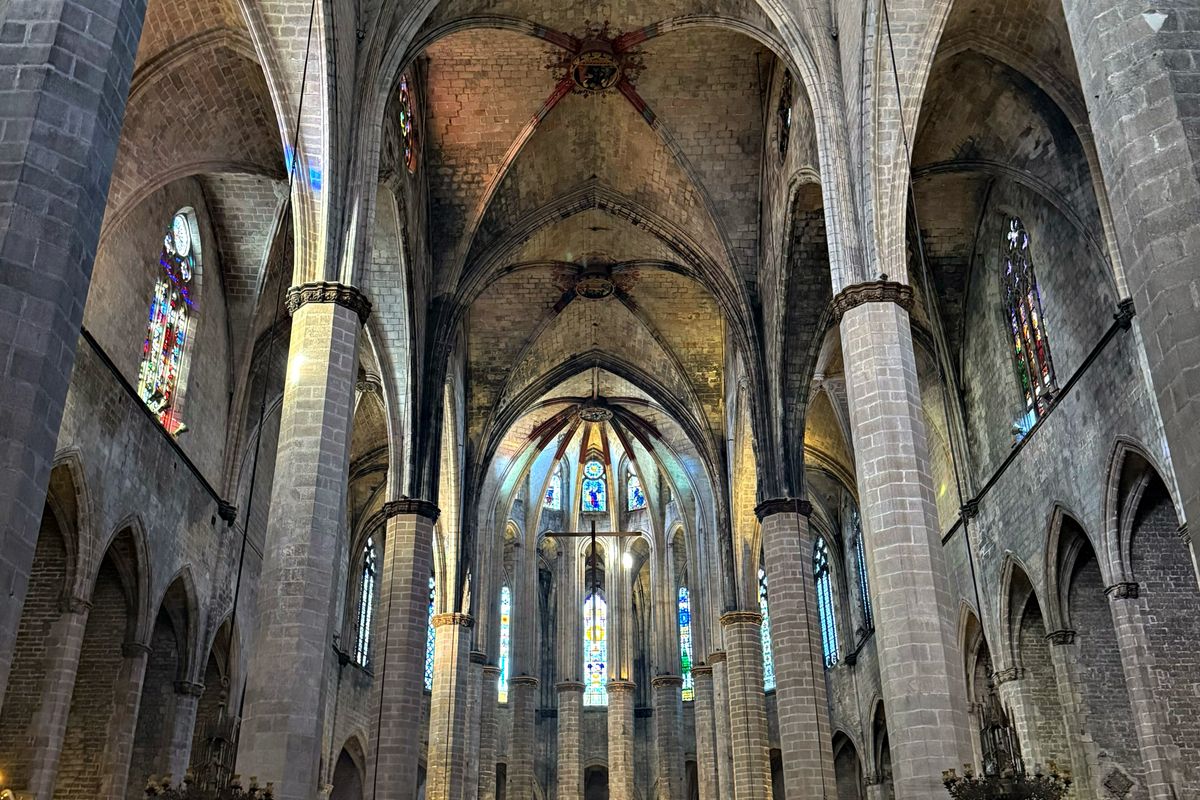
The cathedral of the sea, which isn't a cathedral
Santa Maria del Mar gets called the "cathedral of the sea," and the name is a small lie that everyone forgives. It was never the seat of a bishop — Barcelona already had its cathedral up the hill, a building the city's elite kept largely to themselves. The merchants and porters of the Ribera wanted a church of their own, so they paid for one and, in the case of the bastaixos who hauled the stone down from the Montjuïc quarries on their backs, they carried it. Construction ran from 1329 to 1383. Roughly fifty-five years, which for a medieval church of this scale is almost indecently fast.
That speed is the whole point. Because one generation built it, the church has a single idea and sticks to it — no later wing in a fussier style, no baroque chapel grafted on by a duke with money to burn. This is the purest surviving Catalan Gothic, a different animal from the French kind. Where a northern cathedral reaches up and crowds you with detail, this one spreads out: three naves of nearly equal height, columns set further apart than in any other medieval church standing, walls left mostly bare. You walk in expecting gloom and get even, sideways light.
People stop talking the moment they cross the threshold — not because a sign told them to, but because the building turns down the volume of your own thoughts. The quiet stunner of the old city, and it costs nothing to stand in.
A practical wrinkle: the church is free outside the paid guided-tour hours, which add a climb to the roof and towers for the view over the rooftops. Want only the nave? Come morning or late afternoon, keep your voice low, and don't expect to photograph anything well — the light that makes it beautiful also defeats most phone cameras. Ildefonso Falcones's novel La catedral del mar turned the building into a pilgrimage site for readers; the city's own tourism notes on Santa Maria del Mar carry the current tour times, and if the place feels busy for a half-empty church, that book is the reason.
Carrer Montcada, a street of palaces
From the side of Santa Maria del Mar, Carrer Montcada runs north — a narrow corridor of stone that was, six hundred years ago, the most fashionable address in the city. Merchant families built their palaus here: tall and plain on the street, then opening into courtyards with external staircases once you pass the gate. Several now hold museums and galleries, so you can walk in and look at the architecture for free whether or not the art inside interests you.
You will not get lost — the street is short. What's worth doing is slowing down enough to notice the carved lintels and the way the buildings lean in until the sky narrows to a ribbon. Few places in the centre keep the medieval layout this intact, and the Picasso collection lives inside five of these palaces, knocked together.
The Picasso most visitors don't expect
Know one thing before you buy a ticket, because it saves disappointment: the Museu Picasso is not where the famous works live. No Guernica here (that's in Madrid), and the canonical Cubist pieces are mostly elsewhere too. What Barcelona has, more completely than anywhere on earth, is the formative Picasso — the boy who arrived as a teenager, the academic studies, the seascapes and portraits, then the slide into the Blue Period.
Walking the rooms in order does something a greatest-hits show never could: you watch a technique sharpen and then a temperament take over. The early academic paintings are almost show-offishly good. Then the colour drains out, the subjects get poorer and lonelier, and you read the Blue Period not as a style choice but as a young man working through something. One suite of rooms holds his complete set of fifty-eight variations on Velázquez's Las Meninas, where a single old masterpiece gets dismantled and rebuilt over and over. Visitors who arrive bored by "early work" tend to leave quietly impressed. Buy from the museum's own ticketing page and nowhere else; resellers add a markup for nothing.
If the museum leaves you wanting more medieval bones, the next walk is into the Gothic Quarter just across Via Laietana, where the streets get tighter and the Roman wall surfaces in odd corners.
Don't skip El Born CCM
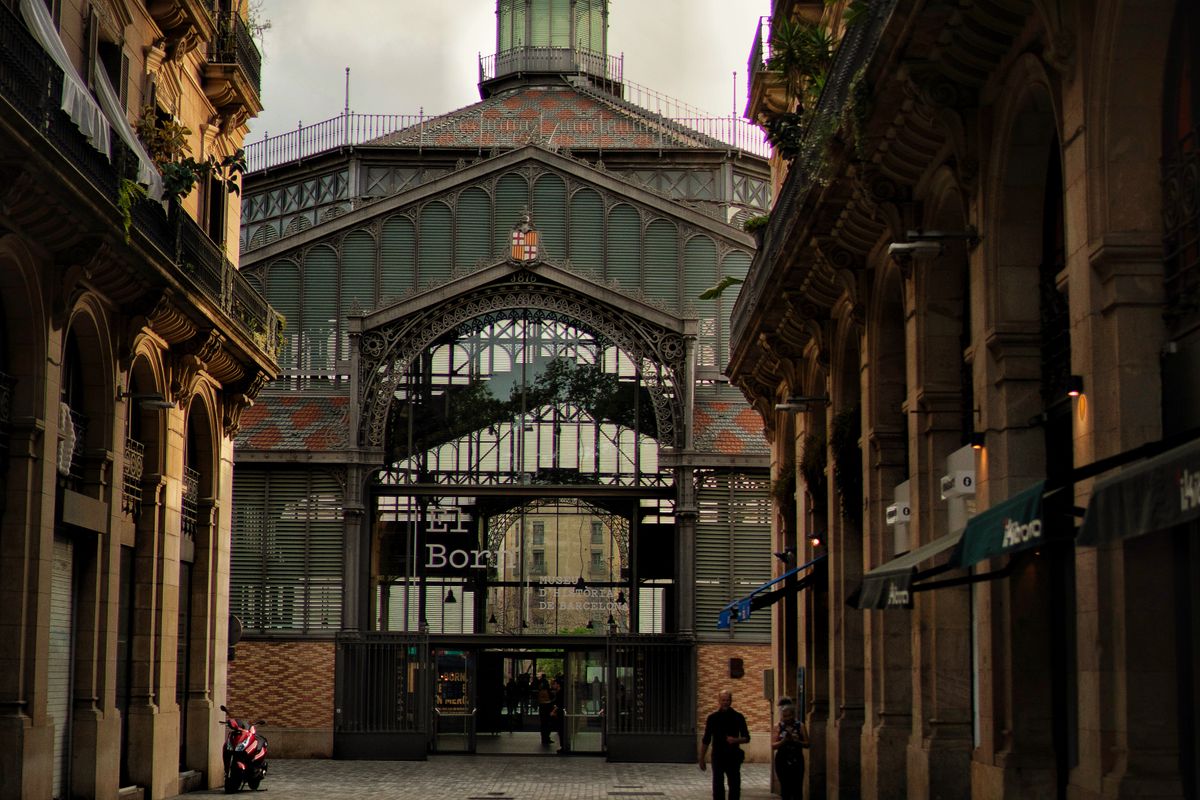
Between the museum and the church, almost everyone passes the old iron-and-glass market hall on the Passeig del Born without going in — a small mistake. Digging up the floor of the disused Mercat del Born for a library, the city found the streets of the eighteenth-century neighbourhood demolished in 1714 to clear ground for a citadel. Rather than pour concrete over it, they roofed it and opened El Born Centre de Cultura i Memòria. You walk on raised gangways above the excavated lanes, wells and all, and the concourse is free even if you skip the ticketed rooms.
The Passeig del Born itself — the wide promenade linking market to church — is the spine of the neighbourhood, lined with bars that fill after dark and an easy straight shot by day.
Eating, drinking, and a plan for the morning
For eating without ceremony, El Born is one of the better neighbourhoods in the centre. Lanes off the Passeig are thick with small tapas bars and vermouth spots, the boutiques run from genuinely good to tourist-tat, and the trick is to walk one street back from anything with a picture menu. A few practical notes, in rough order of usefulness:
- Book the Picasso Museum ahead. Standard entry runs about €12, and slots sell out. Buying online in advance is close to mandatory in season.
- Go for free if you can plan it. Entry is free on the first Sunday of the month and on certain weekday evenings — the free slots are released a few days out and vanish fast, so set a reminder rather than gambling on the door.
- Under-18s are free year-round, no ticket lottery required.
- Santa Maria del Mar is free outside the paid tower-and-roof tour hours. The rooftop tour is worth it once; the nave is worth it every time.
- Time the order. Church first thing when it's emptiest, museum mid-morning, market and lunch after.
A morning that works: Santa Maria del Mar at opening, ten minutes up Carrer Montcada, the Picasso Museum on a pre-booked slot, El Born CCM on the way back, an early vermouth before the lunch crowd. Three hours, almost no queuing, the best of La Ribera unrushed.
Save your serious eating for after the art — a long lunch followed by a museum in the afternoon heat is how good days go sideways. When the appetite kicks in, our notes on Catalan tapas and vermouth cover the Born bars worth the detour and the ones to walk past.