Gaudí
Casa Batlló & La Pedrera
Two Gaudí houses, four short blocks apart on Passeig de Gràcia. Both ask a steep ticket price for not very much floor space. Here is how to choose, and when to skip the queue entirely.
People arrive on Passeig de Gràcia expecting to "do the Gaudí houses" as a single errand, then realise that means two tickets, two hours, and somewhere north of sixty euros for both. So a fair question comes up on the pavement: if you only spring for one, which one?
We have gone in and out of both more times than we can defend, at different hours and in different moods. They are not really competing for the same visit. One is a show; the other is a building. Which you want depends entirely on what you came to Barcelona to feel.
The house of bones, turned up to eleven
Casa Batlló is the one with the dragon on its back. Gaudí reworked an ordinary 1870s apartment block in the mid-1900s and left it looking dredged from a reef: a facade shimmering in broken blue and green tile, balconies shaped like masks or skulls — locals call it the casa dels ossos, the house of bones — and a humped, scaly roofline most people read as the spine of Saint George's dragon, a spear-shaped turret stuck through it.
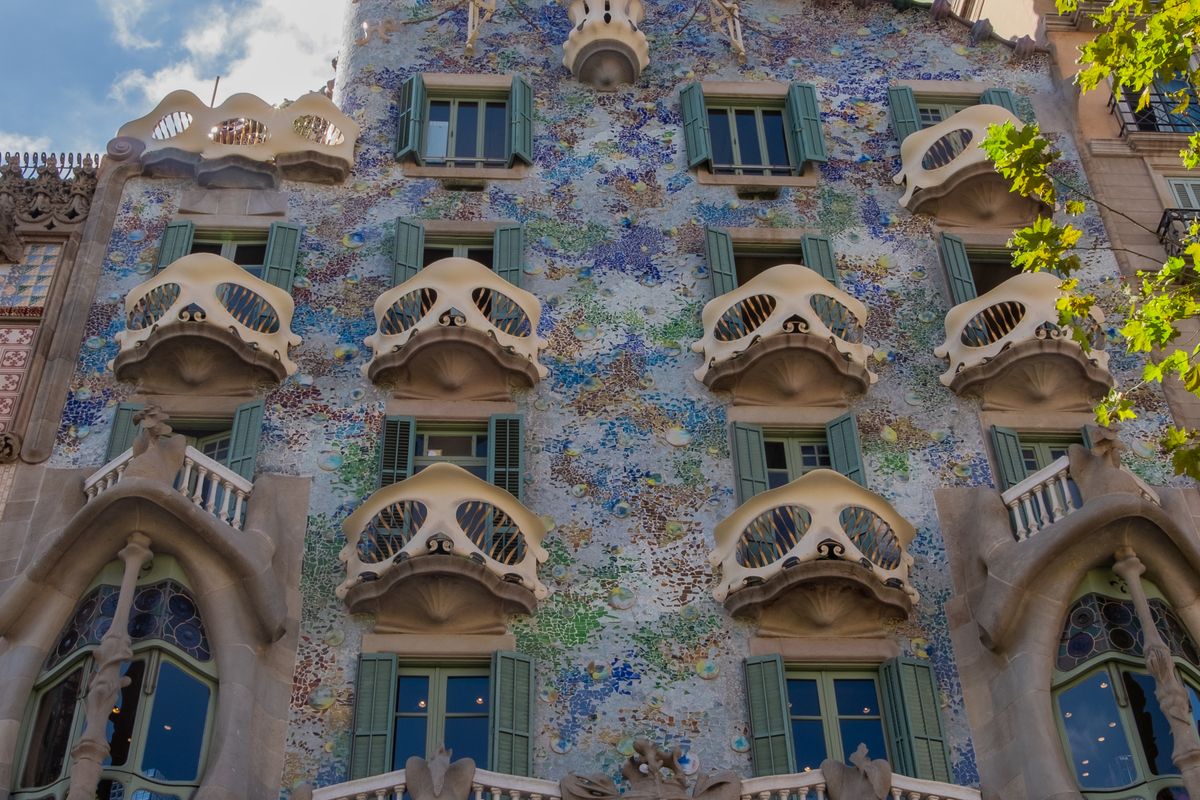
Inside, though, Casa Batlló has become less a historic house and more a produced experience. Tablets, projection, augmented-reality overlays and a sound-and-light room near the top run the visit, and none of it has much to do with how anyone ever lived here. It is clever, heavily marketed, and children tend to love it. Purists grumble. Both reactions are correct.
This is also, almost always, the more crowded of the two, and it stays open latest — well into the evening, which spreads the load but rarely thins it. If the immersive, screen-driven format is the draw, this is your house. If it is the part you would rather not pay for, read on.
Stone that moves, and a roof full of warriors
Walk a few blocks up and Casa Milà — everyone calls it La Pedrera, "the quarry," which began as an insult — does the opposite. No colour, no tile, no spectacle bolted on. Just a great undulating cliff of pale limestone that seems to ripple, fronted by balconies of black wrought iron twisted closer to seaweed than to railings. Its facade carries no weight; the structure stands on an internal frame, which in 1910 was close to heresy.
Its interior earns the ticket honestly. You take in a restored period apartment furnished to the era, then the brick attic — the Espai Gaudí — a ribcage of catenary arches doubling as a small, genuinely good museum of how the man thought. And then the roof.
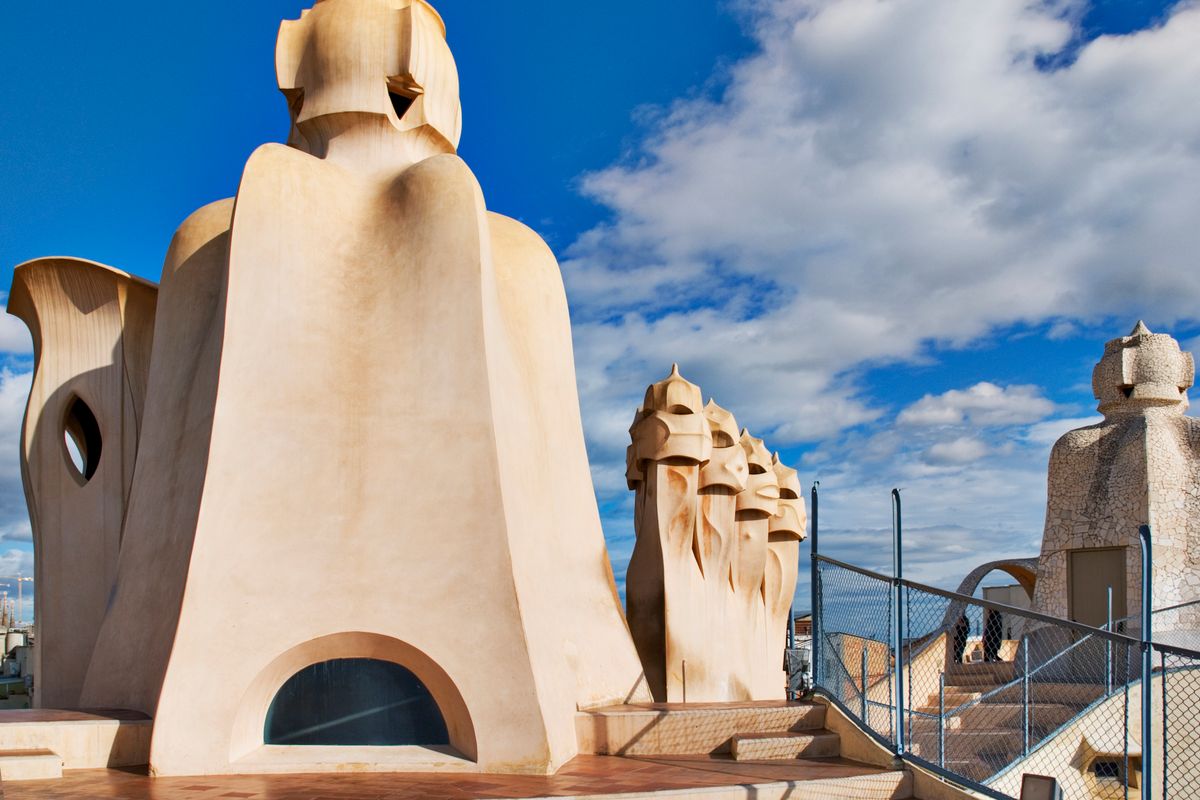
That rooftop is, for our money, the single best architectural space in the city you can stand on. Chimneys and vents rise as helmeted figures — knights, or warriors, depending who is describing them — set across a terrace that rolls and dips so the skyline keeps reframing as you walk. Supposedly these shapes nudged the design of Darth Vader's helmet; true or not, you will believe it up there. Aim for the last slot before closing, or an evening tour, when the stone goes amber and the crowd thins to almost nothing.
If you make us pick one ticket: La Pedrera, for the rooftop and the attic, when you came for the architecture. Casa Batlló, for the spectacle, when you have kids or want to be dazzled rather than taught. Both, only if you genuinely love Gaudí and have a slow morning to spend.
The free part nobody tells you about
Here is what the ticket pages would rather you skipped over: the facades are the masterpieces, and the facades are outdoors, on a public street, free, forever. Stand on the far pavement of Passeig de Gràcia and you take in everything that makes either building extraordinary without paying a cent.
Better still, both houses sit on or beside one of the densest stretches of architecture in Europe. Locals nickname the block around Casa Batlló the Illa de la Discòrdia, the Block of Discord, because three rival architects built clashing showpieces almost shoulder to shoulder:
- Casa Batlló — Gaudí's reef, the one most people photograph first.
- Casa Amatller — Josep Puig i Cadafalch's stepped, Flemish-gabled neighbour right next door, all pinks and creams and ceramic.
- Casa Lleó Morera — Lluís Domènech i Montaner's softer, sculpture-laden corner at the other end of the block.
Look across from the opposite side and you get three completely different answers to one question — what should a rich family's apartment block look like — built within a few years of each other. That comparison alone is worth a slow ten minutes, and it costs nothing. The whole strip is the natural extension of the Eixample and its modernisme, the gridded district these houses were dropped into.
Both buildings carry UNESCO World Heritage status as part of the Works of Antoni Gaudí. That recognition covers the architecture — not the projection screens bolted in later. Worth keeping in mind when you weigh what the ticket is actually buying you.
What it costs, and how not to waste it
Neither is cheap. Standard entry runs roughly in the high twenties to mid-thirties of euros, and Casa Batlló's add-on tiers — the ones that get you onto its roof or skip more of the line — climb higher than that. Both sell timed-entry slots, and both sell out in peak season, so booking ahead is less a tip than a requirement; turning up cold in summer usually means a long wait or no entry at all. A few things we have learned the slightly-too-expensive way:
- Book a specific time slot online, not a flexible "valid any day" ticket — the dated ones are cheaper and let you sail past the standby queue.
- Go first thing or last thing. Mid-morning to mid-afternoon is when the tour groups stack up and the rooms get shoulder-to-shoulder.
- For La Pedrera specifically, weigh the night or sunset visit. The rooftop after dark is a different, quieter, better experience, and the price gap over daytime entry is small.
- Check the UNESCO listing and each official site for current hours before you commit — opening times shift by season, and the houses occasionally close floors for events.
Confirm prices and slots on the source pages: Casa Batlló and La Pedrera both list current tickets directly, which beats the resellers that pad the cost.
So, honestly, which?
If you have one ticket's worth of time and you came for Gaudí the engineer — the man who made stone behave like water and stuck warriors on a roof — go to La Pedrera and give the rooftop and attic the hour they deserve. If you came to be wowed, are travelling with kids, or just want the most photogenic interior in the city, Casa Batlló delivers exactly that, screens and all.
Whichever you choose, cross the street first and look at both facades for free, Block of Discord thrown in — the best of these houses was always meant to be seen from the pavement. After this, the obvious next stop is La Sagrada Família, where Gaudí stopped decorating apartments and started building a mountain.