Sea & hill
Gràcia
A town Barcelona swallowed in 1897 and never quite digested. Come for the squares; stay because nobody rushes you out of them.
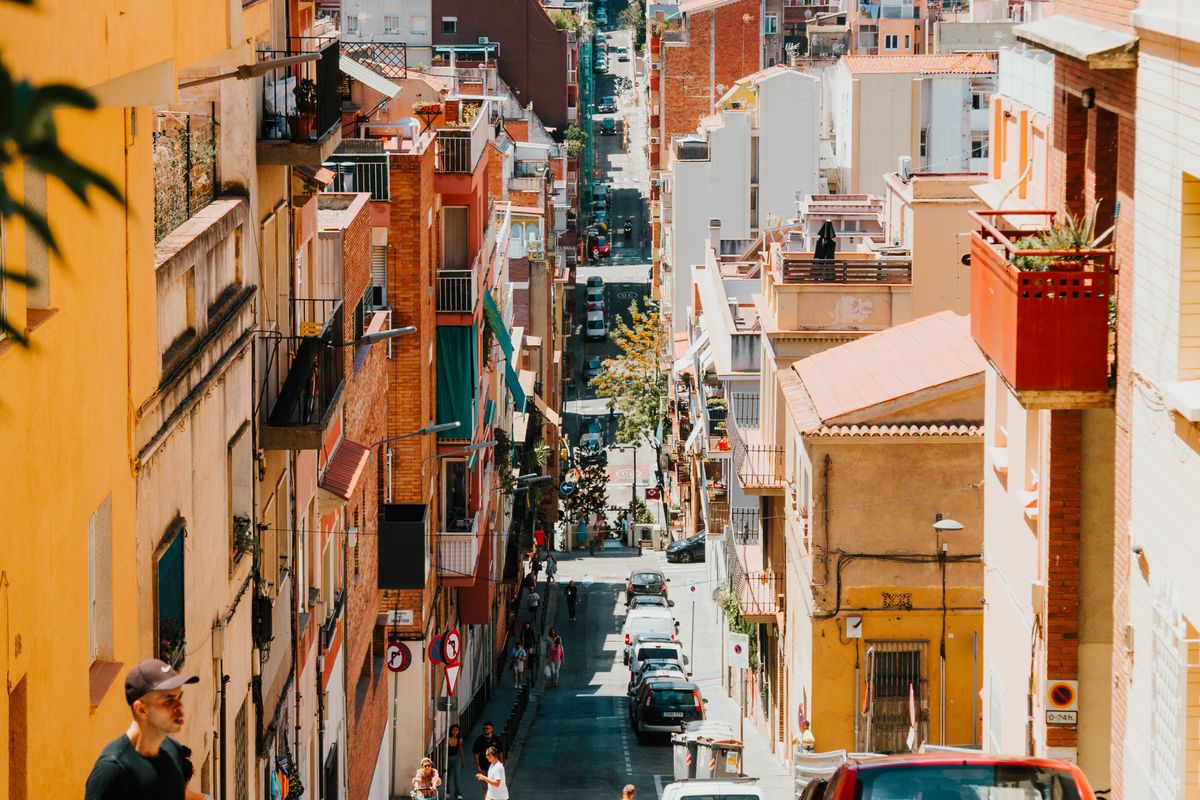
You feel the change before you can name it. Walk up from the Eixample, cross Travessera de Gràcia, and the streets shrink. The dead-straight grid gives out. Buildings drop to four or five storeys, balconies fill with washing and bicycles and the odd defiant Catalan flag, traffic thins until you can hear a conversation across the road. Gràcia was its own town until 1897, and it has the geography of a place that grew on its own terms — short blocks, irregular junctions, squares that arrive without warning.
Here Barcelona stops performing for visitors and just gets on with being lived in. One famous sight, on the edge. The rest is texture: independent shops, a cinema that refuses to dub anything, an evening ritual built around five or six squares.
The squares are the whole point
Gràcia is organised around its plazas, and learning four of them is most of the navigation you will ever need. None are grand. Each is the size of a generous courtyard, ringed by terraces, filling at dusk with whoever lives nearby — students, families, retirees with a dog, people who have clearly used the same bench for thirty years.
- Plaça del Sol — the social engine. Built in 1840, packed every warm evening with people on the stone steps nursing a beer from the nearest bar. Loud, young, the place to start.
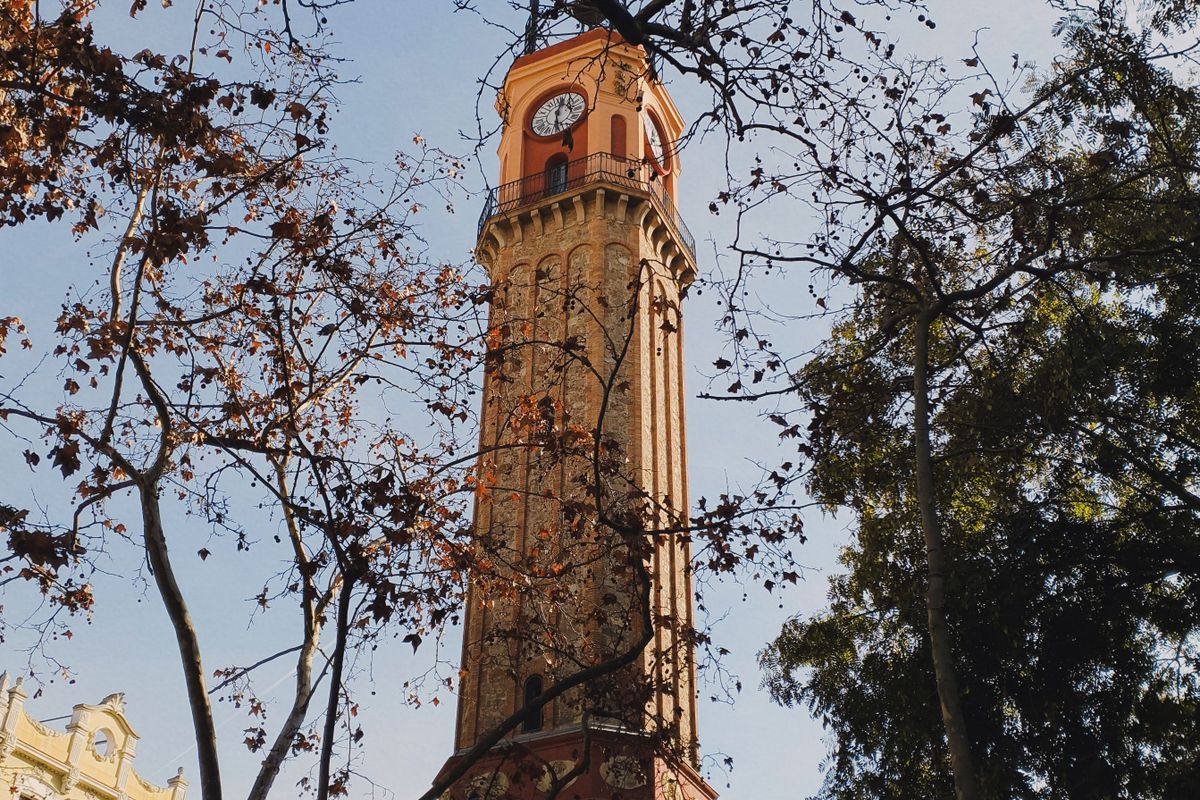
- Plaça de la Vila de Gràcia — the civic one, with the old town hall and Campanar clock tower over the terraces. Calmer, prettier, good for a first drink.
- Plaça de la Virreina — the postcard. A small church, a few orange trees, café tables, far fewer cameras than there ought to be.
- Plaça de la Revolució — a quieter local square that catches the late sun, named for the September 1868 revolution that nobody bothers to say in full.
There is no recommended route. They sit a few minutes apart on foot, and the streets between them — Verdi, Torrijos, Travessera de Dalt — are the actual experience. Wander. Lose the thread. Another plaza turns up inside ten minutes.
Spend one evening doing a slow lap of the squares with a drink in each, and you will understand Gràcia better than any monument could teach you. The barrio is the sight.
What to do when there's nothing you "have" to see
Gràcia rewards aimlessness, which makes it a hard sell to checklist tourists. Still, a few fixed points give an afternoon shape. Carrer de Verdi is the spine. Halfway up sits Cines Verdi, an arthouse cinema running since 1983 that shows films in their original language with subtitles — a quiet act of resistance in a country that dubs almost everything, and the reason the street fills with foreign residents on a wet Tuesday. Around it the independent shops earn the bohemian label: secondhand bookshops, design studios, a vinyl place or two, ceramics, the sort of clothes shop run by whoever made the clothes.
Then there is the drinking, which here means vermouth. The weekend hora del vermut — a glass of cold red vermouth on the rocks with an olive and a slice of orange, usually before lunch — is a genuine local habit, not a revived gimmick. Old bodegas pour it from the barrel alongside plates of tinned seafood and crisps. You order one, talk, order another. That is the entire programme.
How to read a Gràcia evening. Nothing happens early. Terraces stay quiet until eight or nine, then fill fast and stay full. If a square looks dead at seven, give it two hours. The barrio runs on its own clock; trying to beat the rush just means sitting alone.
The festa that buries the streets in paper
If you can choose your week, choose the third week of August. The Festa Major de Gràcia has run since 1817 and turns the neighbourhood into something close to collective theatre. Streets compete to be the most elaborately decorated; for months beforehand residents build enormous themed installations — undersea worlds, jungles, whole imagined cities — almost entirely from papier-mâché, recycled card and paper, then hang them overhead so you walk through tunnels of the stuff.
For about a week the barrio vanishes under the decorations. Music in the squares every night, communal meals, parades, the correffoc with its sparks and dragons, crowds thick enough that movement slows to a shuffle. It is hot, heaving, and one of the best free things the city does all year — then dismantled and built again from scratch the following summer. Even in February you can feel that this is a barrio that throws a party for itself, not for an audience.
Casa Vicens — the one proper sight, and it's worth it
On the western edge of Gràcia, on a quiet street called Carrer de les Carolines, stands the building that makes the neighbourhood matter to anyone tracing Gaudí. Casa Vicens was his first major commission — a summer house for a stockbroker, built 1883 to 1885, decades before he was the architect everyone now queues for.
It looks nothing like the later work, and that is the appeal. Where most houses of the period kept to plain stone, Gaudí went straight for colour: red brick, bands of green-and-white checkerboard tiles, marigolds in the ceramics, a cast-iron gate of palm fronds. Denser and more obviously Moorish-influenced than the Sagrada Família crowd might expect — and far less crowded. Opened as a museum in 2017, it is that rare thing, a Gaudí building you can move through at your own pace.
It slots neatly into a wider modernist day. We cover the boulevard version of that in our piece on the Eixample & modernisme, where the more famous façades are stacked five minutes apart.
Getting there, and pairing it with the hill
Gràcia is easy. The green line, L3, drops you right in: Fontana puts you on Carrer Gran de Gràcia near the middle of it, Lesseps sits at the top end. No entrance, no gate, nothing to book — you simply arrive in it.
The smart move is to combine Gràcia with what sits directly above it. The barrio runs uphill; keep climbing past Lesseps and you reach the edge of Park Güell. Do the park earlier when it is cooler, then walk down into Gràcia for the afternoon and evening — squares, a film, vermouth, dinner. Downhill at dusk, with a drink waiting, beats uphill in the heat.
For the official version, the city keeps useful pages on Vila de Gràcia, Casa Vicens runs its own house museum site for hours and tickets, and there is a solid public history of the Festa Major worth reading before you go.
The honest verdict
Gràcia is where Barcelona feels lived-in rather than staged. No blockbuster sights bar Casa Vicens, and if you measure a neighbourhood by monuments you will leave underwhelmed. Wrong measure. The point is the squares at nightfall, the vermouth bars, the shops, the cinema, and one week in August when the whole place disappears under paper. Give it an unhurried evening, not a quick photo stop, and it pays you back. Rush it, and you will wonder what everyone was talking about.